
Žilina vs HNK Hajduk Split prediction, preview and odds

Žilina
vs

HNK Hajduk Split
This UEFA Europa League first qualifying round tie pits Žilina against HNK Hajduk Split in an early-season knockout fixture where margin for error is small. With the tie scheduled in mid-July, both clubs will be keen to establish positive momentum in European competition; the knockout format elevates the importance of tactical discipline, set-piece defending and away-goal dynamics (where applicable by competition rules).
UEFA Europa League
Žilina
HNK Hajduk Split
World

Žilina Coach
P. Cernak

HNK Hajduk Split Coach
Z. Vulić
Venue
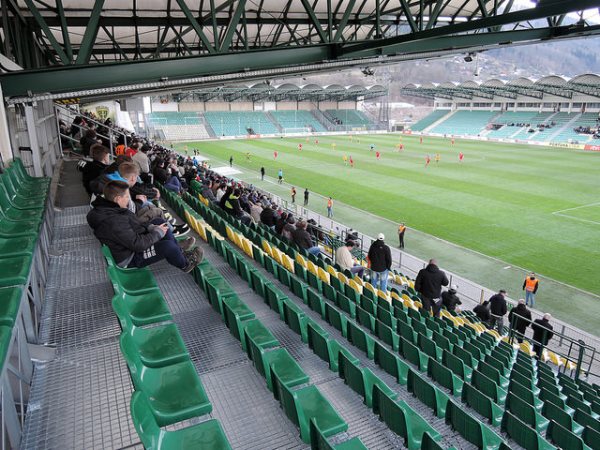
Štadión Pod Dubňom
Športová 9
Overview
This UEFA Europa League first qualifying round tie pits Žilina against HNK Hajduk Split in an early-season knockout fixture where margin for error is small. With the tie scheduled in mid-July, both clubs will be keen to establish positive momentum in European competition; the knockout format elevates the importance of tactical discipline, set-piece defending and away-goal dynamics (where applicable by competition rules).
Available public data on recent form and injuries is limited, so match assessment should emphasise structural strengths: which side controls the tempo, how each coach is likely to approach away versus home legs, and which team can convert half-chances. For bettors that means focusing on game models — expected tempo, defensive organisation and likelihood of both teams creating clear opportunities — rather than relying on detailed form lines that are not yet available.
Expanded context
This fixture arrives at the start of the European calendar, so both clubs will still be shaping match fitness and integrating summer transfers. The first qualifying round is often decided by small margins — early goals, individual errors or tactical tweaks can swing a tie. Without verified injury or suspension lists, it is prudent to treat squad availability as uncertain and to watch published lineups close to kickoff.
Tactically, qualifiers typically produce cautious away displays and more measured home approaches; the balance between pressing aggression and defensive compactness will determine where value lies. Given limited public form data, contextual signals such as preseason results, travel demands and managerial approach will be more informative for assessing likely game dynamics than raw season stats.
Key takeaways
This block gives a quick scan of the most useful context on the current page.
Early qualifying ties hinge on tactical discipline and game management more than seasonal form.
Lack of verified injury and recent-match data increases value in lineups and team news closer to kickoff.
Home team balance vs. away team pressing/containment will shape chances and tempo.
Betting focus should lean on match model signals (goals timing, both teams to score, cards) rather than outright certainty.
Preview
Žilina and HNK Hajduk Split meet in a single-elimination European qualifier where preparation and match details matter more than seasonal sample sizes. Žilina will look to control possession at home and limit transitions, while Hajduk Split—traditionally solid in structured away plans—may try to exploit quick breaks and set pieces. Expect early caution from both sides as managers value defensive solidity in a tie that can be decided by one moment.
Because verified recent-match form and injury lists are not available, watching starting XIs and first-half tactics is crucial. If the home side presses high and forces turnovers, the game could open; otherwise, it may stay tight with limited clear-cut chances.
Team form
Available public records show no completed competitive matches for either side in this season’s dataset, so there is no recent-form series to compare directly. That absence means we should interpret form through a different lens: preseason rhythm, squad continuity and coaching philosophy. Teams that have kept a stable core tend to start European qualifiers with clearer patterns, while clubs undergoing heavy turnover can be inconsistent early on.
For bettors this translates into a premium on timing — when teams reach match sharpness — and on short-term indicators like lineups, substitutions and early tactical choices. Defensive shape in the opening 20 minutes and first-half risk appetite are likely better predictors of the match flow than historical goal averages that are currently unavailable.
Head-to-head
No head-to-head fixtures are available in the provided dataset, so there is no direct historical sample to inform this tie. In such cases the head-to-head signal is weak and should not be used as a primary guide. Instead, comparative analysis should rely on recent squad continuity, managerial style and how each side performs in similar knockout or away contexts.
When direct meetings are missing, pay attention to comparable benchmarks — how each team typically handles pressure in two-legged or knockout scenarios — rather than looking for patterns that do not exist between these specific clubs.
Common questions
Short answers generated from the data currently available on this page.
Who looks more likely to win this qualifier?
With limited public form and no available odds, there is no clear favorite from the dataset; match-day lineups and tactical approach will be the best immediate indicators.
Is both teams to score a sensible angle?
It can be a viable market if both sides select attacking lineups, but in early qualifiers the default expectation is caution—so wait for starting XIs before backing BTTS.
How should I use the lack of stats when betting?
Treat missing stats as an argument for waiting until team news and markets settle; focus on observable signals like lineup continuity, early match tempo and managerial tendencies.
Main pick
No predictions available — confidence 33%.
No predictions available — confidence 33%.
Rationale: Given the lack of verified recent-match data, injuries and market prices, issuing a decisive pick would rely on speculation. The most responsible stance is to wait for confirmed lineups and live market movement. If forced to frame a betting approach now, prioritize short-term signals: expect a cautious opener, monitor whether either manager fields an aggressive XI, and consider lower-risk markets that react to confirmed team news (first-half goals, cards, or both-teams-to-score) rather than full-match match-winner bets. Confidence in any pre-line pick is limited (33%).
Predicted score: - - -
Status: scheduled
Odds context: No bookmaker prices are available for this match yet, so the read has to lean more on match context and the model signal than on the market.
Bookmakers
Sports Predictions And Analytics